What is the Basilica Cistern?
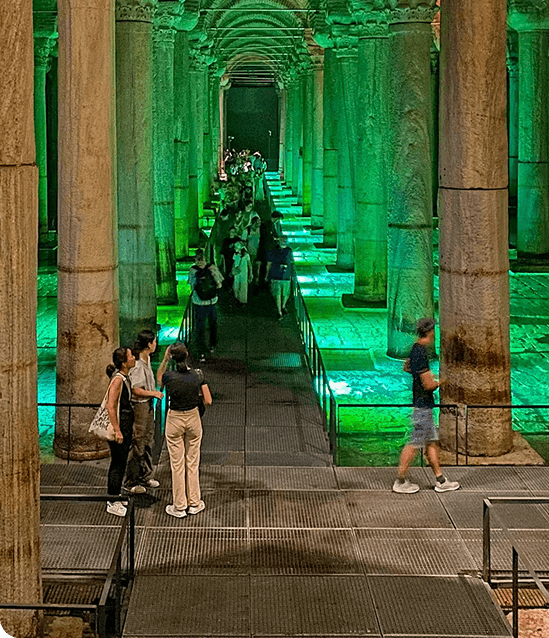
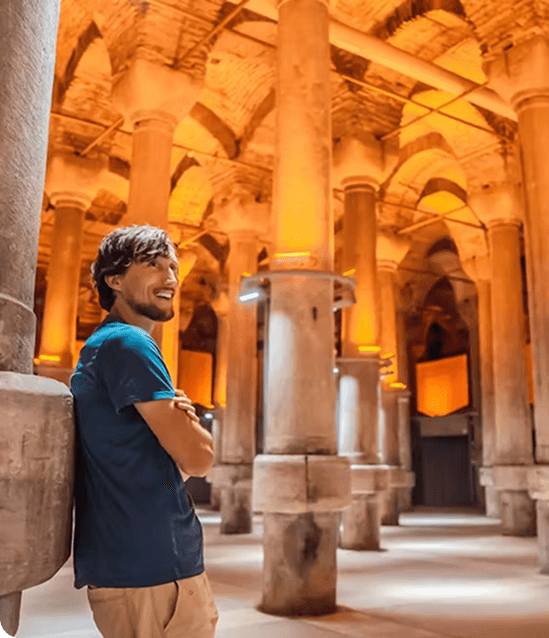
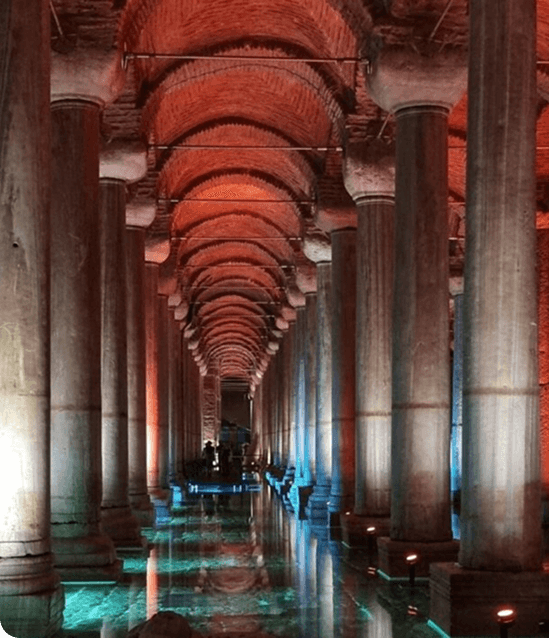
The Basilica Cistern is the largest of over 100 ancient cisterns that lie beneath Istanbul. Measuring 138 metres long and 65 metres wide, it is an extraordinary feat of Roman and Byzantine engineering — an underground cathedral of water, where torch-lit columns rise from shallow pools and ghostly fish glide through crystal-clear water.
For centuries it lay forgotten, known only to locals who drew water by lowering buckets through holes in their cellar floors. It was rediscovered by Dutch traveller Petrus Gyllius in 1545, and has since been painstakingly restored into the extraordinary museum visitors see today.
History & Construction
The cistern's construction required an enormous workforce. Historians estimate that up to 7,000 slaves laboured to dig the foundations and transport the materials — many of them recycled columns and capitals plundered from ancient temples across the Roman Empire.
Water was fed into the cistern via a 19-kilometre aqueduct system from the Belgrade Forest to the north of the city. This supply chain was so robust that the cistern could keep Constantinople’s population alive for months during a siege — a lifeline that proved critical several times during the city’s turbulent history.
Architecture & Design
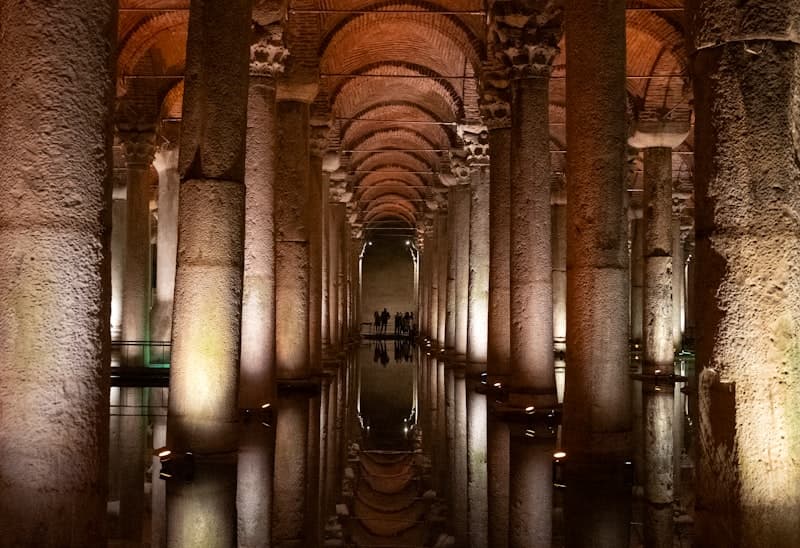
The cistern's 336 marble columns are arranged in 12 rows of 28, spaced 5 metres apart and rising 8 metres to the ceiling. The columns are a fascinating mixture of styles — Corinthian, Ionic, and Doric — because they were quarried or plundered from earlier pagan temples across the empire.
The Medusa Heads
Perhaps the most talked-about feature of the cistern — and the subject of many theories — are the two Medusa column bases in the northwestern corner of the chamber. One is placed sideways and the other is inverted (upside down), a positioning that has fascinated historians and tourists alike.
Restoration & Today
The 1987 restoration drained the cistern, removed centuries of mud, and built the walkways visitors use today. Over 50,000 tonnes of mud were removed, along with coins, jewellery, and Byzantine artefacts. The cistern now has a dry floor-level walkway system running between the columns, and the water depth has been reduced to a shallow decorative level.
A further major renovation from 2022–2024 dramatically expanded the visitor experience, adding new lighting installations, interactive digital exhibits about the Byzantine Empire, and enhanced accessibility features.
Visiting Tips
Tickets & Prices
The Basilica Cistern is one of Istanbul's most popular attractions and queues can be very long, especially during summer months and weekends. We strongly recommend booking skip-the-line tickets in advance.